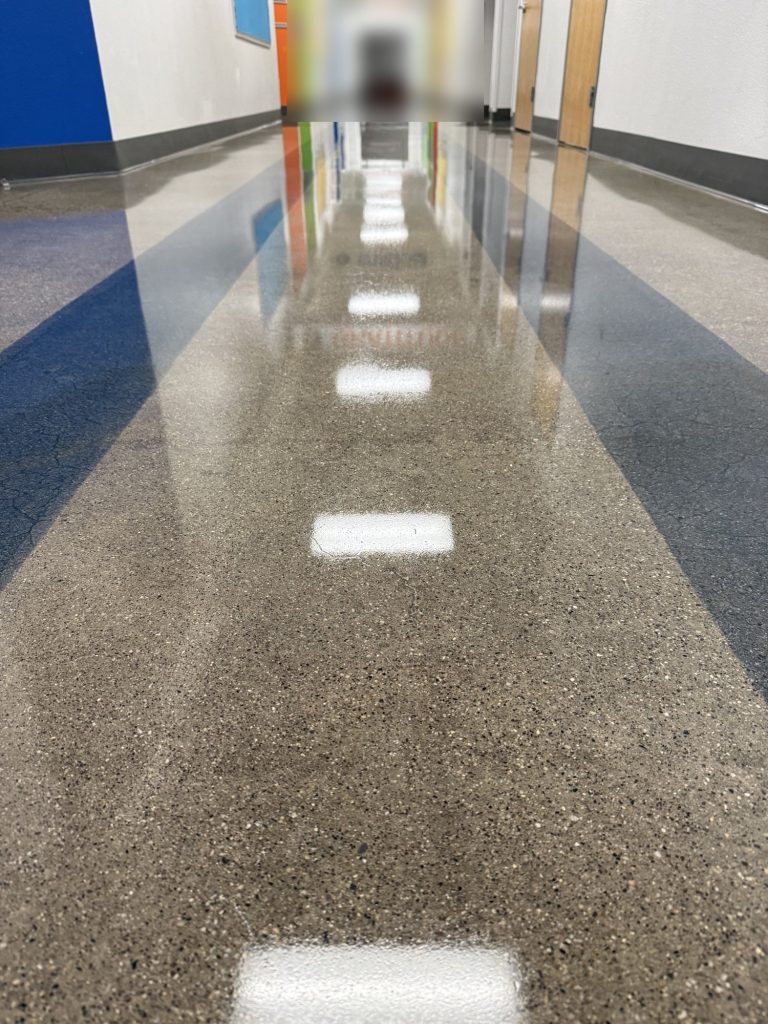
For facility managers, property owners, and general contractors, the floor in a high-traffic space shapes how a building looks, how it is maintained, and how often it must be closed for floor work. Two of the most common commercial choices are polished concrete and vinyl composition tile (VCT). Both can serve well; the right one depends on how the space is used, the condition of the slab, and how your team plans to maintain it.
At CFC-WM, we install and refinish commercial floors across West Michigan as part of our flooring services. Here is how the two options compare.
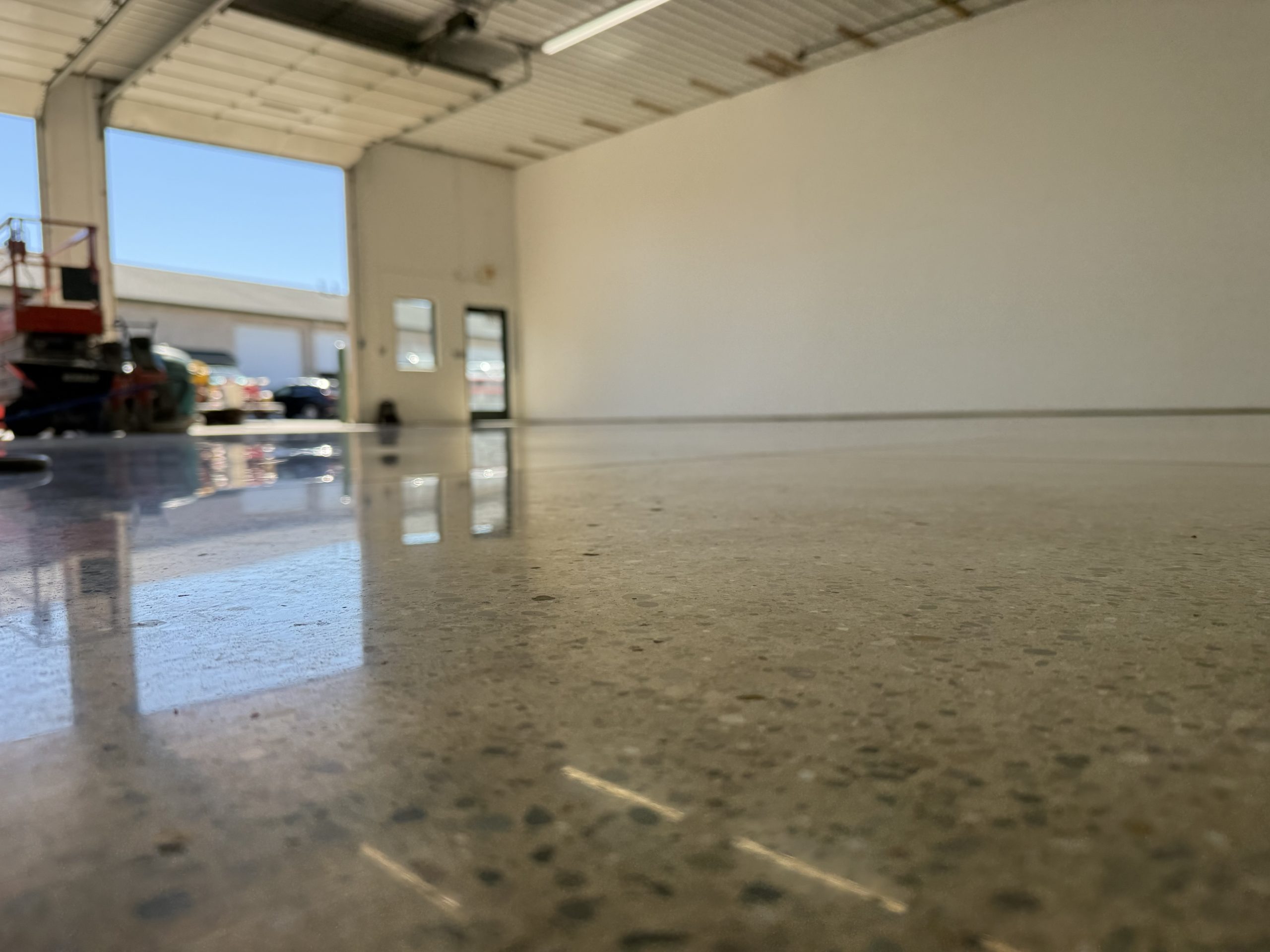
High-Gloss Polished Concrete Shop Floor
Durability Under Heavy Traffic
Polished concrete is the slab itself: mechanically ground, densified, and polished. With no tile to come loose and no topical coating to peel, it is a strong fit for heavy foot traffic, carts, and rolling equipment. It can still chip or crack if the slab has existing problems, so an honest assessment of the concrete comes first.
VCT is a resilient, time-tested tile that handles daily foot traffic well. Individual tiles can dent, scuff, or lift under heavy point loads or moisture, but a damaged tile can be cut out and replaced without disturbing the rest of the floor. That ease of repair is a real advantage.
Maintenance: Strip-and-Wax vs. Burnishing
Maintenance is often where the two floors differ most.
VCT depends on a protective finish. To keep its shine, the floor needs regular buffing and periodic strip-and-wax cycles, in which old finish is chemically removed and new coats are applied. That work takes chemicals, labor, and drying time, and it repeats over the life of the floor.
Polished concrete skips the wax entirely. Routine care is typically daily dust mopping, auto-scrubbing with a neutral cleaner, and periodic burnishing to bring back the sheen. Over time, high-traffic lanes may need a light re-polish, but there is no stripping cycle.
Downtime and Disruption
For occupied buildings, downtime matters. Installing polished concrete takes several grinding and polishing passes, and it requires removing existing flooring and adhesive first. Once it is complete, though, ongoing maintenance seldom requires closing the space for long.
VCT installs efficiently over a properly prepared substrate, but each strip-and-wax cycle means clearing the room, applying finish, and waiting for it to cure. Facilities with tight operating schedules should weigh those recurring closures alongside the initial installation.
Appearance and Design
Polished concrete offers a clean, modern look, with sheen levels ranging from satin to high gloss and finishes that can reveal more or less of the aggregate. Stains and dyes can add color.
VCT offers a wide range of colors and patterns for borders, wayfinding, or a bright, uniform look. When well maintained, it presents a crisp, clean finish that suits many institutional and commercial settings.
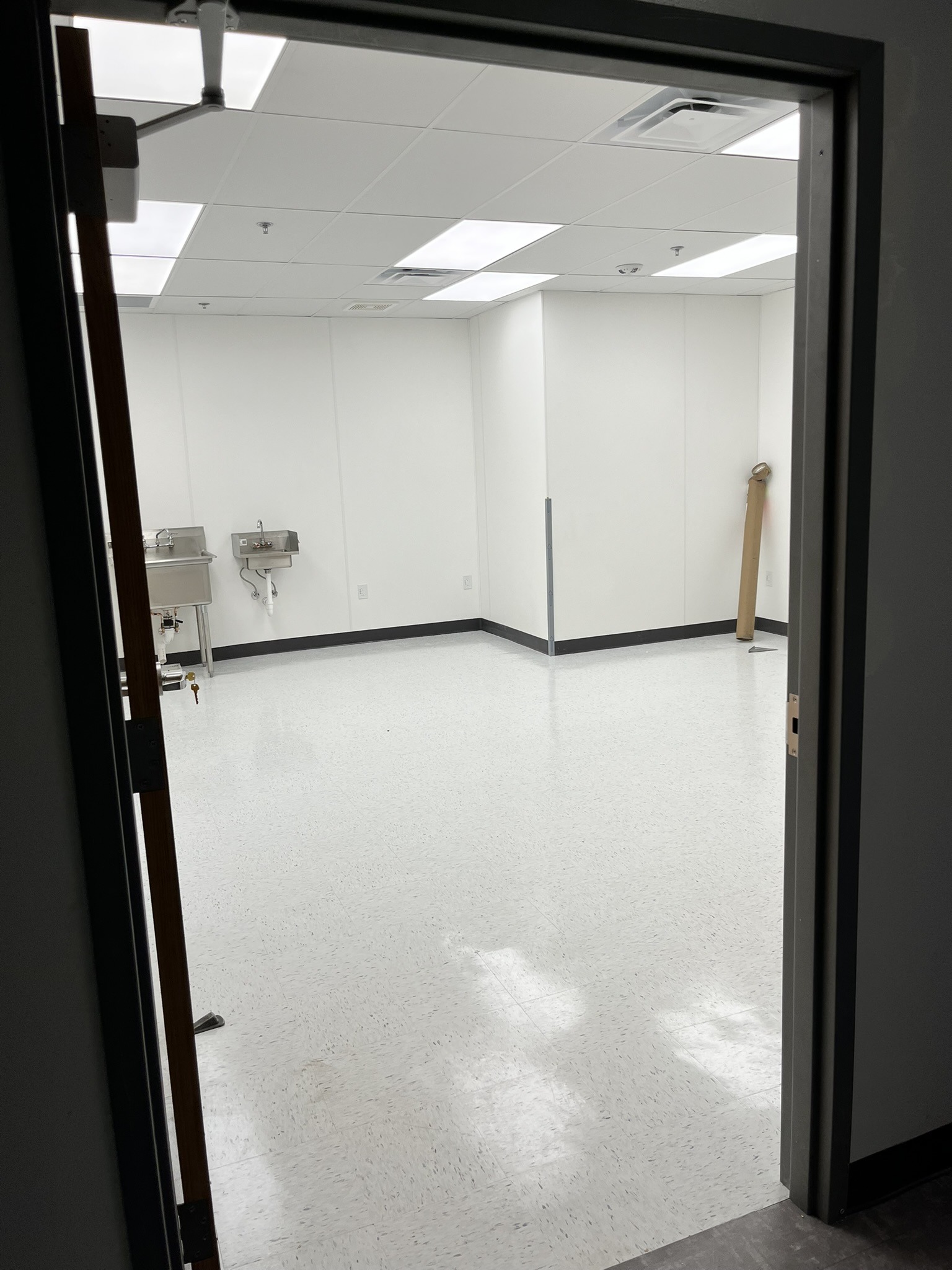
Bright White VCT in a Commercial Room
Where Each Floor Fits
- Warehouses and light industrial spaces: Polished concrete is often the natural choice, because it handles equipment traffic and avoids wax maintenance.
- Offices: Either can work. Polished concrete suits open, modern layouts, while VCT is common in kitchenettes, utility areas, and back-of-house spaces.
- Schools and classrooms: Both are widely used. VCT is familiar to many custodial teams, and polished concrete can reduce recurring strip-and-wax work.
- Retail: Polished concrete delivers a durable, attractive sales floor. VCT offers color flexibility for branded or zoned layouts.
- Corridors and high-traffic hallways: Polished concrete holds up well to constant traffic, and VCT remains a practical, repairable option where patterns or color coding are needed.
When LVT or Carpet Tile Makes More Sense
Polished concrete and VCT are not the only options. Luxury vinyl tile (LVT) offers realistic wood and stone looks, added comfort underfoot, and typically lower day-to-day maintenance than VCT, making it a good fit for offices, lobbies, and customer-facing areas. Carpet tile is often the better choice where acoustics and comfort matter, such as conference rooms, private offices, and open work areas. For areas that need a seamless coating, such as some utility or service spaces, epoxy may also be worth considering.
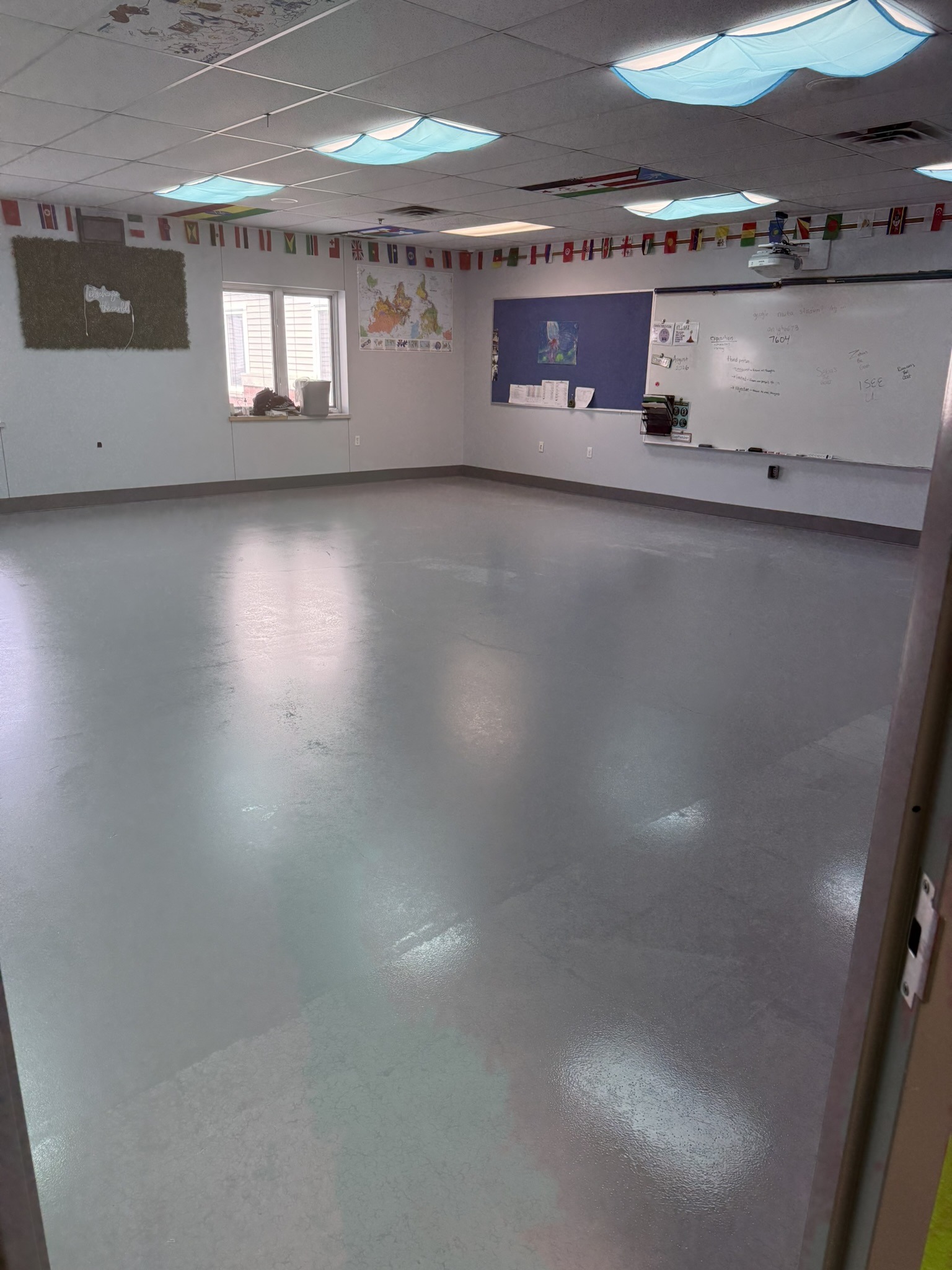
Seamless Gray Epoxy Floor Coating
Many buildings combine several of these materials.
Planning Your Project
The best floor depends on your slab, your traffic, your maintenance resources, and your schedule. As a self-performing contractor, CFC-WM handles flooring alongside remodeling and general contracting, so floor work can be coordinated with the rest of your project. If you are weighing options for a facility in West Michigan, we would be glad to walk the space with you and talk through what fits. Request a quote to get started.
Frequently Asked Questions
Can polished concrete be installed in an existing building?
Often, yes. Existing flooring and adhesive must be removed, and the slab is evaluated for cracks, patches, and overall condition, which determines the finish it can achieve.
Is polished concrete slippery?
Polished concrete that is kept clean and dry generally offers good traction for commercial use. Like any hard floor, it can become slippery when wet or contaminated, so walk-off mats at entrances and prompt cleanup of spills are recommended.
Does VCT still make sense for commercial spaces?
Yes. VCT remains a practical, repairable, and widely used floor, especially where color options and easy tile replacement matter.
CFC-WM | Built. Fixed. Solved.
2865 Sanford Ave SW, Grandville, MI 49418 | 616.295.4659
Licensed and Insured